

What is Codependency

What is Codependency?

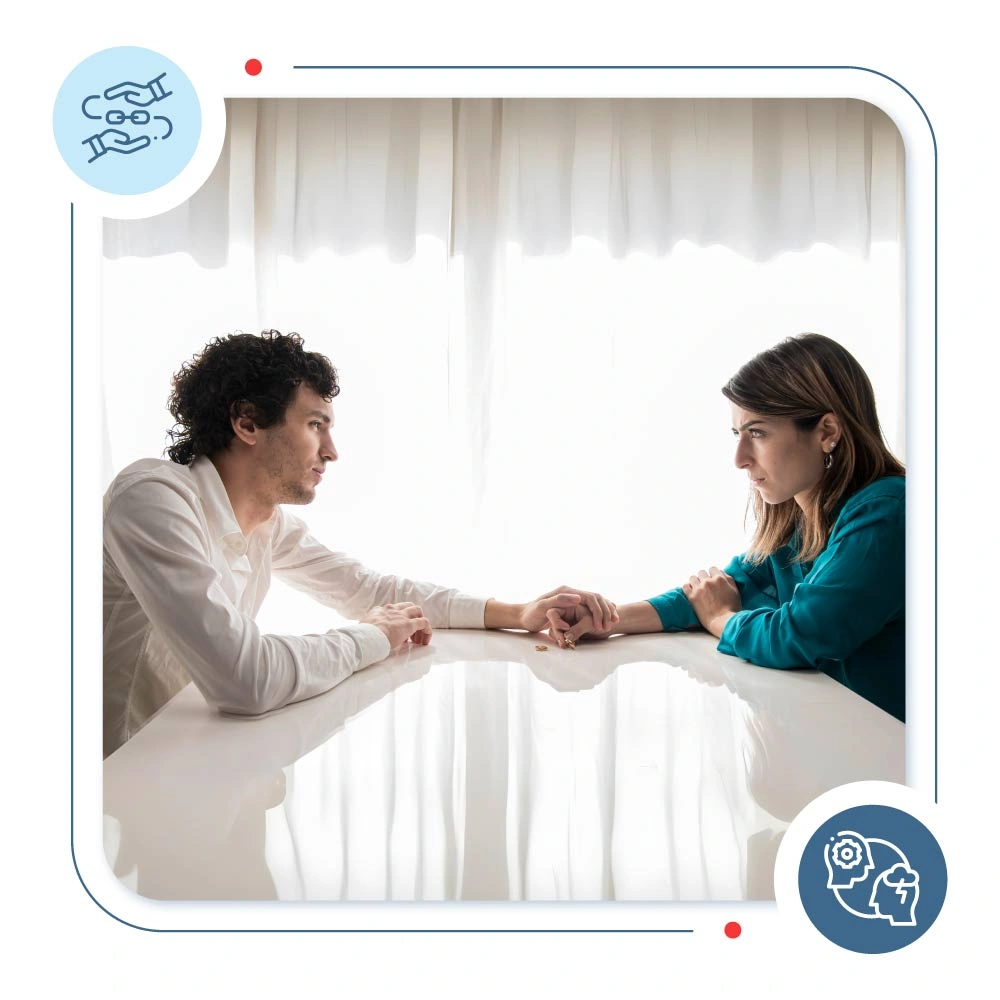
Codependency is a condition in which a person is overly focused on meeting the needs of another person while sacrificing or neglecting their own needs. Codependency is described as a pattern of dysfunctional relationships where people struggle to say no, put others first, need approval or validation, and tie their self-worth to taking care of others.

Historically, the term arose in addiction-family but is now used more broadly for one-sided, controlling, or caretaking relationships. Although not an official Diagnostic Statistical Manual diagnosis, clinicians and researchers recognize a cluster of consistent traits (excessive caretaking, low self-esteem, people-pleasing) that can cause major distress and impaired relationships. Codependent people commonly prioritize others’ needs, struggle to set healthy boundaries, and feel responsible for fixing others’ problems.

Mid Cities Psychiatry offers structured and compassionate therapies in Euless, TX, to help families build strong connections and encourage mutual healing.

Symptoms of Codependency

The codependents find it difficult to achieve balance in meeting their needs and looking after others, hence they end up experiencing chronic stress, depression, or burnout. The emotional indicators are a sense of low self-worth, pleasing others, an inability to say no, and a desire to control or fix other people’s problems. Symptoms appear as: enabling conflict avoidance, emotion suppression, and loss of personal interests. In the long run, these patterns decrease autonomy and may exacerbate anxiety or depressive symptoms; identifying these indicators is the initial step to healthier boundaries and recovery. Common symptoms are:
  • Excessive caretaking or rescuing others.
  • Difficulty setting boundaries.
  • Fear of rejection.
  • Feeling responsible for others’ feelings or problems.
  • Poor self-esteem.
  • poor decision making
  • Staying in unhealthy relationships to avoid abandonment.


Symptoms of Codependency
Causes Of Codependency

Causes Of Codependency

Codependency is most commonly understood as an effect of early relational life and family role modeling. Addiction, emotional neglect, inconsistent caregiving, or strict family rules during childhood can teach a child to focus on others to feel safe or maintain attachment. The risk is also increased by traumatic experiences, social modeling of caretaking roles, and certain personality factors (such as high agreeableness and low assertiveness). Codependent behaviors may also be reinforced by cultural or occupational factors (e.g., caregiving professions) over time, making recovery more difficult without a deliberate shift.

Some common causes are:

  • Growing up with parental addiction or instability.
  • Emotional neglect or invalidation in childhood.
  • Learned roles: “fixer,” “caretaker,” or “peacemaker.”
  • Trauma or chronic stress in the family system.
  • Reinforcement from relationships that reward self-sacrifice.
  • Codependent personality disorders (low self-esteem, high compliance).

Codependency Treatment

Codependency treatment focuses on addressing both the behaviors and the underlying causes that keep unhealthy patterns. Root causes such as childhood trauma, neglect, family addiction, or low self-esteem often contribute to codependency.

At Mid Cities Psychiatry ,we perform detailed psychiatric assessments and offer personalized services that address emotional health, boundary setting, and relationship well-being. With evidence-based strategies and supportive counseling, you can begin to overcome codependency symptoms and develop a stronger, more grounded sense of self.

Medications

  • Antidepressants
  • Anti-anxiety medications

Psycho Therapies

Codependency Treatment

Codependency FAQ's

01

Are there self-help strategies for overcoming codependency?

Yes. Begin with simple, small boundary experiments (practice saying no), daily self-care habits, journaling to remember what you want, and becoming part of supportive groups. Self-help books and guided workbooks paired with therapy enhanced progress.

02

Is codependency a mental health disorder?

There is no official DSM diagnosis of codependency, but it is a clinically significant pattern that is associated with distress and dysfunction; clinicians treat it by treating the symptoms and the underlying either trauma or mood disorders.

03

What books or resources can help with codependency?

Frequently used materials are workbooks addressing boundaries and codependency, evidence-based articles, peer-offered groups (such as Codependents Anonymous), and clinical referrals and journal articles.

04

How long does it take to heal from codependency?

There’s no set timeline. Growth can be a long process that takes months or years, depending on the degree of the problem, adherence to treatment, and rehearsal of the new skills; most individuals report a significant change in a few months of regular practice.

Real Stories, Real Recovery

Lady J
Lady J
I’ve been going to Dr. Kazi since 2015 and she has helped me get through a lot of my hardest times. When I came to her in 2015 my mind had taken over my body and my life. She got me through it. She is caring, professional and excellent at her God-given gift as a Psychiatrist. Thanks, Dr. Kazi for giving a part of yourself to many daily. You are a true Blessing to many.

Barbara P
Barbara P
I have been a patient for two years. Every staff member has been outstanding. Amanda Bell is a blessing. She is compassionate, and sincere, listens intently and is always able to calm me and help me focus and get the most from my treatments. Dr Kazi has been available whenever I need help. She is on top of my care and aggressively monitors my progress. I came to her suffering major depression and overall a mess. My mental health has substantially improved under her care and she is continuing to help me reach and maintain even higher levels of health. The office does have strict policies but everything is clear and patients are well informed at all times. The guidelines are appropriate and reasonable. I highly recommend this mental health clinic

Kala A
Kala A
Fantastic staff and providers, excellent services, amazing care, compassionate professionals, timely prescription refills, and a calm atmosphere. What more could you ask for?

Reahanna D
Reahanna D
I have had amazing experiences with this business, both on the medical and business side. Any issues I've experienced with billing have been handled gracefully and with patience; the staff are very easy to talk to and are understanding. I LOVE PA Hofer; she (and other staff) are always very quick to answer online Portal questions, are very flexible with visits, understand when it comes to medication costs/changes, and go the extra step when it comes to evidence-based practice.
Deepika T
Deepika T
I've been taking my mom to Dr. Kazi for the past 17 months and we still go. She is an amazing physician and her staff is very warm and welcoming. She has helped my mom when mom needed her the most. If it was not for Dr. Kazi's, I don't know what would have happened to my mom. I am so grateful to her. The bonus is her staff is awesome. Very response to emails and phone calls. Amanda is amazing!! I can't thank Dr. Kazi enough!!

We provide a comprehensive care provision for the most common mental issues people struggle with, such as PTSD, ADHD, OCD, anxiety, depression, sleep disorder, schizophrenia, and numerous other mental health conditions.